Embark on a journey towards a more eco-friendly workplace with our comprehensive guide on 10 Tips for Recycling at Work. Explore practical advice and insights to make a positive impact on the environment while enhancing your company’s sustainability efforts.
Learn about the importance of recycling, how to implement a successful recycling program, and strategies to engage employees in recycling initiatives. Discover how small changes can lead to significant environmental benefits.
Importance of Recycling at Work
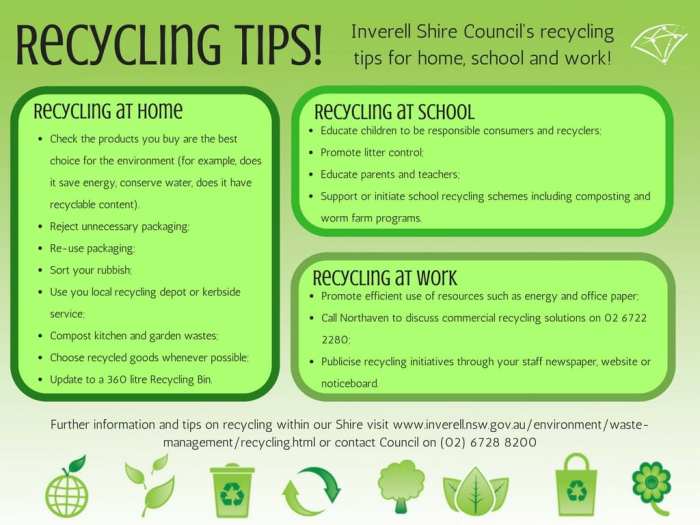
Recycling at work plays a crucial role in preserving the environment and promoting sustainability in the workplace. By incorporating recycling practices into daily operations, companies can significantly reduce their carbon footprint and contribute to a healthier planet for future generations.
Environmental Benefits of Recycling at Work
- Reduces greenhouse gas emissions: Recycling materials like paper, plastics, and metals helps lower the energy required to produce new products, ultimately decreasing carbon emissions that contribute to climate change.
- Conserves natural resources: Recycling allows for the reuse of materials, reducing the need for extracting raw resources from the environment. This helps protect natural habitats and biodiversity.
- Prevents pollution: Proper disposal of recyclable materials prevents them from ending up in landfills or incinerators, reducing the release of harmful chemicals into the air, soil, and water.
Statistics on the Impact of Recycling on Reducing Waste
According to the Environmental Protection Agency (EPA), recycling one ton of paper can save 17 trees, 7,000 gallons of water, and 463 gallons of oil. Additionally, recycling aluminum cans saves 95% of the energy needed to produce new cans from raw materials, showcasing the significant impact of recycling on waste reduction.
Implementing a Recycling Program
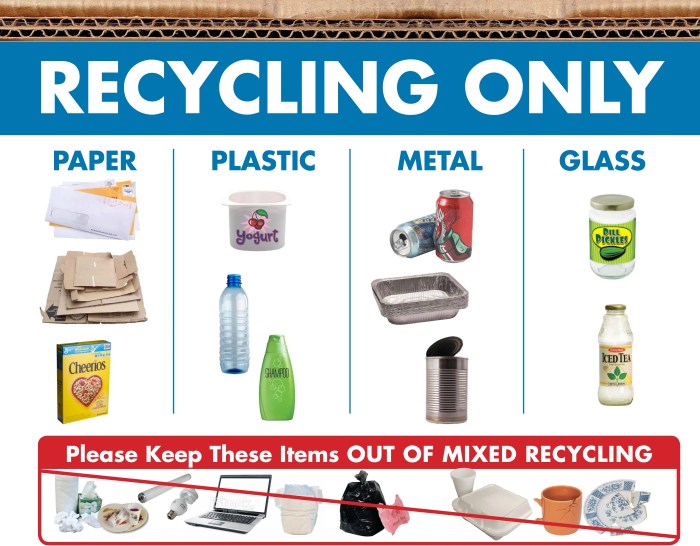
Establishing a recycling program in the workplace is crucial for reducing environmental impact and promoting sustainability. By implementing recycling practices, businesses can contribute to a cleaner and healthier planet. Here are the steps to set up a recycling program at work:
Steps to Establish a Recycling Program:
- Conduct a waste audit to identify the types and amounts of waste generated in the workplace.
- Educate employees about the importance of recycling and provide training on proper recycling practices.
- Set up designated recycling bins for different materials such as paper, plastic, glass, and metal.
- Partner with a recycling service or facility to collect and process recyclable materials.
- Implement a monitoring system to track progress and ensure compliance with recycling guidelines.
Key Components of a Successful Recycling Initiative:
- Strong leadership support and commitment to sustainability goals.
- Employee engagement and participation in recycling efforts.
- Clear communication of recycling policies and procedures.
- Regular evaluation and improvement of the recycling program based on feedback and results.
Challenges and Solutions When Implementing Recycling Practices at Work:
- Challenge: Lack of employee awareness and participation in recycling.
Solution: Implement educational campaigns and incentives to encourage employees to recycle.
- Challenge: Difficulty in segregating recyclable materials.
Solution: Provide clear signage and color-coded bins to make recycling easier for employees.
- Challenge: Limited resources or budget for recycling initiatives.
Solution: Explore cost-effective recycling options and seek partnerships with local recycling facilities.
Engaging Employees in Recycling Efforts

To create a successful recycling program at work, it is crucial to engage employees in the process. By encouraging participation and raising awareness, you can foster a culture of sustainability in the workplace.
Strategies to Encourage Employee Participation
- Organize educational workshops or training sessions to inform employees about the importance of recycling and how they can contribute.
- Create clear and accessible recycling stations throughout the office to make it easy for employees to separate recyclables from waste.
- Implement a rewards system or recognition program to acknowledge and incentivize employees who actively participate in recycling efforts.
Creative Ideas to Promote Recycling Awareness
- Host a recycling competition among departments to see who can collect the most recyclable materials within a specific time frame.
- Organize a “green team” made up of volunteer employees who can lead and promote recycling initiatives within the workplace.
- Use visual aids such as posters, infographics, or videos to communicate recycling guidelines and tips in a fun and engaging way.
The Role of Incentives in Fostering a Recycling Culture
- Offer rewards such as gift cards, extra time off, or other incentives to employees who consistently recycle and contribute to the program.
- Recognize and celebrate milestones or achievements in recycling efforts to show employees the impact of their actions and encourage continued participation.
- Consider implementing a points system where employees can earn rewards based on the amount of recyclables they collect or the level of their engagement in recycling activities.
Conclusive Thoughts
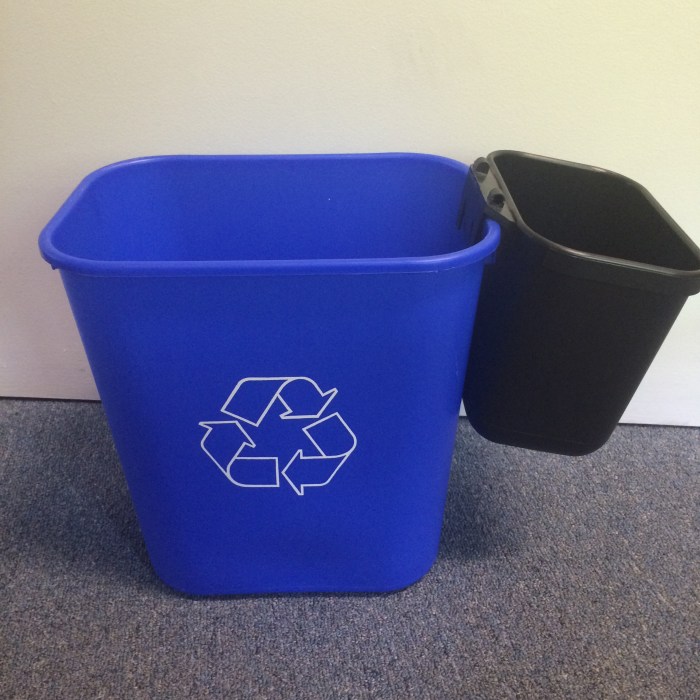
In conclusion, embracing recycling practices at work not only benefits the environment but also fosters a culture of sustainability within your organization. By following these 10 tips, you can make a meaningful difference and inspire others to join the green movement. Start your recycling journey today!